
Introduction
The cultural landscape of academic society meetings has shifted considerably in recent years, with multiple inflection points in relation to the global COVID pandemic. These include increasing awareness of the harmful effects of aviation on the environment, enhanced awareness of limited access for lower- and middle-income countries, and global political polarisation and international political turmoil. As a truly international society, the Organization for Human Brain Mapping (OHBM)'s journey in enabling our global community to continue to connect in order to “advance the understanding of the anatomical and functional organisation of the human brain” reflects these cultural events. While global experiences such as the COVID pandemic highlighted the desire amongst our community to have the opportunity to connect in person, there continue to be major barriers to doing so, such as securing visas, ever-increasing costs and limited grant funding, caring responsibilities, and choices to limit air travel for environmental reasons.1 These barriers affect certain groups and members within our society more than others.
With these multiple motivations in mind, the Sustainability and Environmental Action Special Interest Group (SEA-SIG) made a proposal to the Council and the Executive Office for an online-only ‘Satellite meeting’ to complement the in-person annual event. For OHBM, these types of online events generate multiple potential advantages, ranging from enhanced accessibility to improved membership benefits and financial return to the society. As SEA-SIG, our intention was also to highlight the environmental benefits of a virtual meeting.
Rising average temperatures of both air and sea, coupled with the growing frequency of extreme weather events, serve as a stark reminder that global decision-makers are failing to take the urgent actions needed to prevent a climate catastrophe. After a short break during the COVID-19 pandemic, the global community has returned to ‘business as usual’ mode, with global greenhouse gas emissions increasing to the pre-pandemic levels, which were seen as rapidly as 2021.2 Similarly, the academic sector mirrors this pattern, as academic travel resumes at full speed and international conferences once again bring together researchers from around the world.
Within SEA-SIG, we were keen to remember one of the pandemic’s more valuable lessons: that we can stay meaningfully connected (albeit in different ways) without travelling. Since the pandemic, OHBM has generally chosen not to employ a synchronous (live) hybrid annual meeting format (with the small exception of an online poster trial during Glasgow 2022). Financial and volunteer resources are possibly two key factors in this. However, without a hybrid meeting format, the OHBM annual conference remains out of reach for many scientists for multiple reasons discussed above.
With this in mind, SEA-SIG set out to collaborate with the OHBM Council, Program Committee, and Executive Office to offer an alternative meeting option that would be more inclusive and climate-friendlier. Working with the Program Committee, we were ideally placed to shape the schedule in a fair, transparent, and straightforward way by featuring excellent content submitted for the main annual meeting that was not selected for the final program for various reasons (such as content proposals being too similar within and between annual meetings, a tight schedule, and other factors). The officially rated symposium and educational course proposals that were not selected for the in-person meeting were then screened by SEA-SIG members, who decided upon the final selection of the content based on a high rating of the OHBM Program Committee, thematic coherence, and potential attractiveness to the community.
We were able to showcase more excellent research by leveraging the content that had been submitted for presentation in the annual meeting and that had undergone a rigorous review process. The types of submissions also allowed us to partially mirror the structure of the in-person meeting at the online satellite in terms of session formats. The satellite program consisted of a half-day educational course, a keynote address from 2025-2026 Council Chair Professor Michael Breakspear, three symposia sessions, and an OHBM Special Interest Groups showcase. This three-day event was held on Zoom between 12:00 and 16:00 UTC.
The meeting provided a novel and valuable platform for researchers across the OHBM community to present their newest findings and connect with others outside of the regular annual meeting. Here, we present a report of the events during the first OHBM online satellite event in September 2025, and reflect on future directions for how to continue enabling our global community to connect.
Educational course: Navigating machine learning pitfalls and explainability in brain-behavioral predictive modeling
Nicolás Nieto, Vera Komeyer, Kaustubh R. Patil
Neuroscience is a highly interdisciplinary field and machine learning applications have become commonplace to analyse complex relationships in high dimensional data. Such an endeavour requires skills in both the application domain and machine learning (ML). However, training in ML methodologies is often limited in traditional educational contexts. As a consequence, common pitfalls—such as data leakage, dealing with imbalanced datasets, and confounding variables—may be overlooked, significantly reducing the reliability and validity of results and leading to non-reproducible, non-generalisable, and non-replicable findings.
The educational course format provided an opportunity to systematically combine theoretical information with direct training on the translation and implementation of ML in a concrete research project. First, Dr. Patil presented a general introduction to ML, its objectives, such as generalisation beyond the training data, as well as the conceptual considerations regarding selecting the best-fitting models through cross-validation. Next, Vera Komeyer provided insights into explainable AI, introducing both theory and application of Shapley values for model interpretation. Additionally, she introduced the problem of confounding and how to handle it—including thorough study planning—to arrive at meaningful predictive insights. In the last part, Dr. Nieto expanded upon the topic of ML pitfalls, introducing various points in building ML models where data leakage can occur, and concluded with the issues related to dealing with class-imbalanced datasets.
Throughout the course, the organisers provided a structured, hands-on approach. This ensured that participants understood challenges conceptually and developed actionable skills through the usage of targeted hands-on exercises (based on Google Colab and mybinder.org) where learners could experiment with ML workflows. This allowed learners not only to observe the impact of certain (faulty) pipeline decisions, such as data-leakage-prone implementations, but also to immediately learn how to detect such pitfalls and how to arrive at correct implementations. The course emphasised real-world consequences of ignoring ML pitfalls, enabling learners to apply solutions effectively in their research.
By combining theoretical insights with direct applications and strongly emphasizing on a practical focus, the educational course fostered a deeper understanding as well as implementation skills for reliable and transparent ML methods in neuroscience research. This will ultimately contribute to more trustworthy and impactful scientific discoveries.
Keynote address from Prof. Michael Breakspear: The hippocampal wave machine
Anna Behler, Polona Kalc, Charlotte Rae, Michael Breakspear
The decision on who should be invited as the keynote speaker for our first online satellite was unanimous amongst SEA-SIG: Professor Michael Breakspear, the current OHBM Chair, who has been engaged with the OHBM community for 25 years and is also committed to climate activism.
Charlotte Rae (founding Chair of SEA-SIG) introduced Professor Michael Breakspear, Global Professor of Neuroscience and Psychiatry at the University of Newcastle, Australia; leader of the Systems Neuroscience Group; and ‘a solid okay surfer’.3 The latter could be valuable when leading research on the so-called ‘hippocampal wave machine.’ In the scientific section of his keynote, Professor Breakspear presented a biophysically grounded computational model showing how travelling waves can arise within the hippocampus. The work was largely done by Dr. Anna Behler, showing that spatial gradients in input to the pyramidal neurons along the long hippocampal axis generate directionally organised travelling waves. To study how the hippocampus may act as a “wave machine” of the brain, the model was then extended to also represent the cortex. Hippocampal-cortex coupling was informed by functional gradients derived from a naturalistic memory task, linking the simulated dynamics to task-relevant cortico-hippocampal organisation. Under this gradient-informed coupling, waves travelling from anterior to posterior of the hippocampus reorganised large-scale cortical activity. Thereby hippocampal waves shifted the cortex from global synchrony to travelling wave patterns.
Professor Breakspear’s keynote was inspiring beyond the scientific aspects. He started and ended his talk by locating his research on Awabakal and Worrimi Country, acknowledging that these lands were never ceded and paying respect to Elders past, present, and emerging. He wove his research into his own life journey, sharing formative experiences that shaped his path, and introduced Maple, a therapy dog that helps participants manage scan-related anxiety, under the guidance of Dr. Caroline Faucher. That personal framing helped the audience connect with him not just as a scientist, but as a human. Professor Breakspear concluded the talk by making clear that his scientific practice is shaped by accountability beyond academia. He showed examples of his climate activism, ranging from participating in the annual ‘Rising Tide’ blockade of the Port of Newcastle, the largest coal port in the world, calling for an end to new coal mines, to the rewilding of a deforested cattle farm in Queensland. Finally, he described his involvement in a local research program, led by two Indigenous Research Fellows (Dr. Guy Cameron and Dr. Jennifer Rumbel) that builds connections with the community, strive to increase their inclusion in clinical trials, and help support the knowledge of culturally significant plants held in local Aboriginal communities using high resolution MRI acquired within the principles of Aboriginal data sovereignty.
The keynote was followed by a lively discussion on the infrastructure (in light of climate change), as well as studying the contribution of gamma bursts, the transition between direction of wave propagation, and the application to Alzheimer’s disease. Finally, Professor Breakspear shared his view on the role of academics in (climate) activism, emphasising a profound humility toward the land and the Indigenous people, who call on us to remain open-hearted.
Symposium 01: Targeted brain stimulation enables selective modulation of neural circuits
Jianxun Ren, Prince Okyere, Zhuoran Li, Ines R Violante, Hesheng Liu
The rapid advancement of neuromodulation technologies has opened new avenues for understanding and treating complex brain disorders. This symposium, organised by Professor Zhang and Professor Liu, highlighted key breakthroughs in magnetic resonance (MR)-compatible temporal interference (TI) stimulation, hippocampal modulation for memory, and the somato-cognitive action network (SCAN) as a novel target for Parkinson’s disease (PD).
In the first presentation of the symposium, Dr. Ren gave a talk entitled Personalized functional circuit-guided neuromodulation in Parkinson’s disease. Introducing the SCANs in the primary motor cortex, he showed that the SCAN regions are implicated in PD and that targeting them by deep brain stimulation and by non-invasive transcranial magnetic stimulation reduces increased functional connectivity between SCAN regions and improves PD patients outcomes. He further presented the DeepPrep preprocessing pipeline and the UNITE platform (Unified platform for Neuromodulation with Individualized Target Estimation).
The second talk, entitled Right amygdala targeted transcranial temporal interference stimulation modulating brain network in major depressive disorder, was presented by Dr. van der Stelt on behalf of Professor Zhang. Unfortunately, a technical problem occurred during the session and the presenter was unable to deliver their full talk.
The third presentation of the symposium was entitled Targeted non-invasive stimulation of the hippocampus to shape memory function and was presented by Dr. Violante’s PhD student Prince Okyere. He showed the results of the experiments using the TI stimulation, a non-invasive stimulation technique that can target deep brain structures, such as the hippocampus, in wakefulness and during sleep. He demonstrated that TI can improve episodic memory performance during wakefulness. However, the timing of the stimulation affects the memory consolidation differently during sleep, where the memory consolidation is better when the stimulation is paired with cue.
Lastly, Dr. Li from Dr. Jiang’s lab presented the talk on Multimodal evidence for hippocampal engagement and modulation by functional connectivity-guided parietal TMS. He demonstrated the results of three complementary experiments employing functional connectivity-guided transcranial magnetic stimulation to target the hippocampus. Pairing the single-pulse transcranial magnetic stimulation (TMS) with either electroencephalography (EEG)- or functional magnetic resonance imaging (fMRI)-recording, he showed that the hippocampus can be effectively engaged by stimulating a parietal site that is functionally connected to the hippocampus. In the third experiment, the long-term stability of the effects was investigated using repetitive TMS coupled with fMRI, showing that theta power is suppressed when using functional connectivity (FC)-guided TMS but not when FC was not used.
The symposium addressed the urgent need for innovative therapies for mood disorders, cognitive decline and PD. By bringing together multimodal approaches—combining functional connectivity analysis, advanced neuroimaging, and non-invasive stimulation techniques—this symposium offered actionable insights for advancing research and improving patient outcomes.
Symposium 02: Brain models as a tool for a multimodal integration
Marie-Constance Corsi, Pierpaolo Sorrentino, Damien Depannemaecker, Gian Marco Duma
Recent advances in neuroscience have highlighted the potential of integrating brain models and data analysis to understand brain function and dysfunction on a large scale. Whole-brain network models, supported by human brain imaging techniques such as magnetic resonance imaging (MRI; structural and functional), magnetoencephalography (MEG) and EEG, have emerged as powerful tools for studying how the brain operates within the constraints of its underlying morphological and connectivity organization. These models, combined with advanced artificial intelligence tools for parameter inference, enable researchers to uncover the structural causes of observed macroscopic biomarkers related to cognition, aging, and neurological disorders.
Organised and chaired by Dr. Corsi and Professor Sorrentino, the symposium provided an overview of the cross-talk between brain models and brain data analysis. The symposium was divided into two parts; the first part focused on the modelling mechanisms of brain function, and the second part on integrating information to better understand brain function.
Firstly, Dr. Depannemaecker presented the talk entitled Modeling mechanisms of brain functioning: Example of a neural mass model with neuromodulation. In his talk, he focused on virtual brain models (e.g., refs4,5). In particular, he discussed modelling the dynamics of dopamine and the activation of dopamine receptors in order to better understand the underlying mechanism at the cellular level, which can then be compared to the electrophysiological data of patients (e.g., ref6).
Professor Sorrentino later focused on the translation of the advanced modelling techniques to the clinical environment in his talk entitled Exploring brain models and inversion techniques: Bridging data and pathophysiology. He presented how models and empirical measurements can be merged within a Bayesian approach, to obtain subject or disease-specific information about the (patho)physiological mechanisms in case of multiple sclerosis (e.g., refs7–9).
In the second part of the symposium, Dr. Duma talked about Multimodal neurobiological features to inform whole-brain models for clinical populations. His talk focused on ways to improve generative models by better characterisation of network and local properties, advocating for combining multimodal information from various data, such as morphological covariance, grey matter microstructure, metabolism, local excitatory/inhibitory balance, and biochemical properties (e.g., ref10).
Dr. Corsi concluded the last part of the symposium with the talk on integrating MEG and EEG signals to improve and understand brain computer interfaces (BCI). Combining the data of these complementary modalities can improve the predictive performance in comparison to using EEG data only. Furthermore, she presented a novel approach FUCONE,11 which combines functional connectivity and geometric methods to help improve the prediction of the subject’s intent, and the Python toolbox HappyFeat,12 which can help guide the feature selection and facilitate the transfer of parameters from the classifier to open BCI platforms.
The symposium outlined the transformative role of computational brain models in understanding and interpreting large-scale brain data. To say it with Sydney Brenner, “We are drowning in a sea of data and starving for knowledge […], largely through our unprecedented power to accumulate descriptive facts… We need to turn data into knowledge, and we need a framework to do it.” In this symposium, we contended that brain models, understood as hypotheses about neuronal processes (either physiological or pathological), and their inversion starting from data, might provide the framework envisioned by Brenner. Brain models to generate and interpret features from data and, crucially, to predict unobserved data, is an exciting frontier that can shed light on the fundamental mechanisms of brain function and dysfunction.
Symposium 03: Rigor, Pitfalls and Challenges in Neuroimaging: A Causal Thinking Perspective and Applications
Gang Chen, Zhengchen Cai, Andrew Vigotsky, Chifaou Abdallah
Causal reasoning is fundamental to scientific discovery, yet its application in neuroimaging is still in its nascent stages. By uniting diverse perspectives in this symposium, we aimed to highlight the significance of causal thinking, recent methodological advancements, clinical applications, and the enduring challenges faced in this field.
At the symposium organised by Drs. Chen and Cai, Dr. Chen provided an overview of the foundational principles of causal inference and discovery in neuroimaging in his talk entitled Resting-state fMRI and the risk of overinterpretation: Noise, mechanisms, and a missing Rosetta stone. Without the experimental manipulation in resting-state (rs)fMRI, there are two sources of variability in the data, namely the exogenous factors (e.g., scanner instabilities, head motion) and the endogenous factors (e.g., the hemodynamic coupling), which pose a specific problem in rsfMRI analysis. Due to the noise, the associations in rsfMRI can be under- or over-estimated, and differences in noise levels between groups can lead to spurious, suppressed, or even reversed findings. It is therefore imperative to consider these biases when conducting the analyses.
In the second part, Dr. Vigotsky presented on the pitfalls and fallacies of decoding for causal inference in fMRI. Coming from a background in pain research, he criticised the shift towards the decoding paradigm, which attempts to infer mental states or stimuli based on the decoder. Although it is tempting to interpret the weights of such models causally, he pointed out that we do not know which information decoders use to create predictions, and the models themselves are degenerate and devoid of a causal structure. The difficulty of interpreting these decoders is further complicated by the brain-wide ubiquity of information that can be used for successful decoding. Therefore, the decoders in fMRI are difficult to interpret and lack the necessary context for causal inference.
In the last talk entitled Determinants of epilepsy surgery outcomes after stereo-electroencephalography: A Bayesian causal inference approach, Dr. Abdallah presented her work on how to effectively apply causal analysis to human neuroimaging data, with a focus on clinical context. After building a directed acyclic graph (DAG) and performing a Bayesian logistic regression to classify the outcome of patients after stereoencephalography-guided resection, they found out that the patients with either regional or focal seizure-onset zone have an increased probability of a better post-surgery outcome. The results of their causally conceptualised study showed the support for resection in these patients, whereas extending resection beyond this area offered less additional benefits.
During the symposium, participants gained a comprehensive understanding of the latest techniques and their potential to revolutionise neuroimaging research. The panel discussion fostered engaging dialogue on global signal regression use in rsfMRI studies. Dr. Chang pointed out that removing a global signal can improve the accuracy of correlation estimation in some cases, but can also worsen it in others, and highlighted the importance of proper understanding of the neurovascular coupling.
Special interest groups showcase
Erynn Christensen, Muriah Wheelock, James Kent, Amber Howell, Thomas Hinault, Polona Kalc, Nick Souter
To engage a broader OHBM community and provide an opportunity to forge connections, the SEA-SIG invited fellow SIGs to showcase their work. The Student and Postdoc SIG (SP-SIG), Open Science SIG (OS SIG), and the Brain-ART SIG accepted our invitation and presented their work over the past few years.
The Chair of the SP-SIG, Dr. Christensen, presented the SP-SIG’s mission of providing a supportive network for trainees and postdocs. In addition to their most well-known events during the annual meetings, such as the Lunch with Mentors, symposia focussed on topics related to professional development and academic work, and the most famous of all, the SP Social night and Gala event, SP-SIG facilitates connection and community amongst OHBM trainees. Outside of the OHBM annual meeting activities, the SP-SIG additionally organises the “How-To” webinar series and other online workshops, the fellowship program for trainees and postdocs from underrepresented and/or marginalised communities, and the Mentor-Mentee Program available to all members of the OHBM community. Each year the SP-SIG focuses their activities around the needs and interests of the SP community and the SIG’s elected committee members. They are very responsive to feedback and encourage communication with interested membership and engagement with the broader OHBM community.
In the next part, Dr. Wheelock, the OS SIG Chair, and Dr. Kent, the Open Science Room Chair, provided an overview of the OS SIG’s activities. The OS SIG has a long-standing reputation for promoting open science through educational courses, organising ‘unconference-like’ Open Science Rooms, and the pre-OHBM Brainhack. Their events are designed to be open to everyone, regardless of prior experience in open science or coding. Dr. Adam Craig from the audience posed the question on the ethical dimensions of open science, particularly with regard to data availability. Dr. Kent responded that the OS SIG organises and works on the legal and ethical aspects of safe use and sharing of datasets.
Dr. Howell, Brain-ART SIG’s Chair, presented the rich and aesthetically pleasing work of the group, whose mission is to foster the exchange between art and science by providing a platform to connect artists and scientists within the OHBM community. The short time allotted for the presentation did not do justice to the artistic works of the SIG, which runs an art competition, exhibitions, as well as kids’ activities during the annual meetings. During a short discussion, Dr. Craig suggested the BrainART SIG to provide guidelines or education on effective data visualisation and communication.
Last but not least, Dr. Hinault, the SEA-SIG Chair, opened the presentation of the SIG’s mission and its working groups, followed by Dr. Kalc outlining the endeavours on promoting alternative OHBM meeting formats by the Annual meeting working group, and Dr. Souter, Chair of the Neuroimaging research pipelines working group, who summarised his recent research into measuring and reducing the carbon footprint of neuroimaging pipelines. As Dr. Craig from the audience noted and Dr. Souter confirmed, the SEA-SIG is focusing largely on the aspects of reducing environmental impact over which individual researchers have the most control. However, further action is needed to engage broader institutional and funding bodies in endorsing environmentally responsible research.
Dr. Hinault closed the presentation with an invite to interested OHBM members, who would like to become engaged in the SEA-SIG. All SIGs invited interested community members to get in touch if they wanted to get involved in the SIGs’ endeavours and to nominate themselves for leadership roles.
Conclusion and future directions
Polona Kalc, Charlotte Rae, Ryann Tansey, Anna Behler, Michelle Wang, Lea Michel
The inaugural OHBM online satellite event in September 2025 offered a more inclusive and environmentally-friendly platform for neuroimagers to connect with colleagues outside of the in-person annual meeting. The three-day event ran smoothly overall, providing an opportunity for interested members of the OHBM community to engage with a variety of topics.
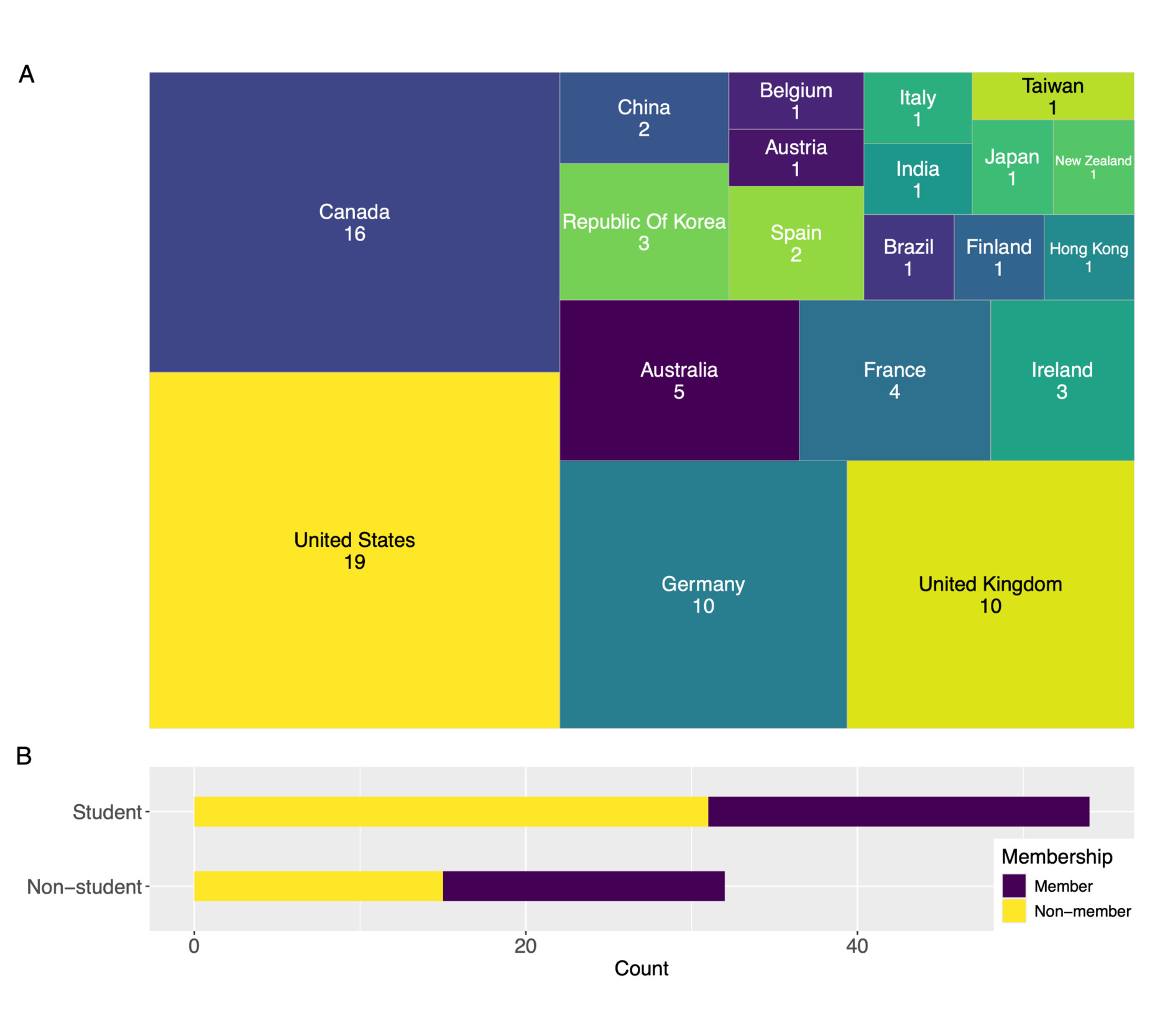
In total, 84 interested community members registered for this event. The majority (64%) were students and early career researchers (within 4 years of completing a graduate degree). The educational course on machine learning proved particularly popular, with over 50 participants actively engaging with the learning material. This demonstrates that there is a high demand for educational courses within the OHBM community outside the regular annual meetings, and that an online format enables easy and more inclusive learning.
The community also welcomed a keynote talk from Professor Breakspear who engagingly contextualised his scientific path and inspired many attendees. The three symposia provided a platform for (early-career) researchers to communicate their research topics and receive feedback from the community. Last but not least, the satellite event also connected members of different SIGs and interested potential new members, who could obtain an overview of the various activities that the OHBM community is undertaking.
As the SEA-SIG, we are altogether delighted with the OHBM community’s response and are particularly pleased that so many of the researchers we contacted confirmed their participation, making this event possible. In the hope that such an event type will continue, we outline a few suggestions for future meetings below.
Inclusivity and diversity of attendance
A modest registration fee was envisioned as a way to attract new members and to help cover the cost of OHBM Executive Office staff time. The fees were finally set at $25 for student members, $50 for student non-members and full members, and $150 for full non-members. However, we believe that some researchers, especially trainees and students, were not able to take part in the meeting due to the registration fee. Although considerably lower than registration for the in-person meeting, the fee may nevertheless have posed a barrier, especially to the groups we most hoped to include. In the future, we should strive to reduce registration fees, possibly through sponsorships, or factor in the cost of the online satellite to membership dues, and include the event for free as a membership benefit.
There are other factors that may have further limited or biased the diversity of attendance, which should be carefully addressed for future satellite meetings. Previously published guidelines on organising inclusive online conferences proposed providing three time zone hubs for events, as there is no ‘one-time-fits-all’ solution.13 In this year’s first trial of an online satellite, only one programme time was offered. We acknowledge that the choice of one time zone was not the most optimal, and was largely excluding participants from Oceania. We opted for this particular timing option due to this year’s meeting being held in Brisbane, Australia, in the hope that many of the participants from that area would already have met in person. Nevertheless, future OHBM online events should consider this limitation. A possible, albeit more demanding, option would be to host sessions in multiple time zones and make the recorded material available directly offline.
Additionally, although the online conference was intended to enable more participants from low- and middle-income countries to join the meeting, the demographic data shows a different picture. The majority of participants came from high-income countries, such as the USA, Canada, Germany, UK, Australia, and France, whereas only four participants came from upper-middle income countries, namely China, India, and Brazil, and none from lower-income countries (Figure 1). However, given the registration fee and other possible technical limitations, the results are perhaps not surprising. The attendeeship may also be reflective of the wider OHBM membership demographic, in which high-income countries tend to be over-represented. This is likely multi-factorial, but even expense of MRI as the dominant methodology employed by OHBM members is a barrier to engaging in neuroimaging research.14 As with the in-person events, the online event could have waived the fee for participants from low- and middle-income countries.
_(**a**)_and_the_number_of_s.png)
Environmental sustainability
In addition to the diversity and inclusivity aspects of the online conference, it is essential to address the environmental aspects. Using the Travel Carbon Footprint Estimator (travel-footprint-calculator.irap.omp.eu)15 we calculated the amount of carbon emissions that would be produced if all the online conference participants were to travel to the annual meeting in Brisbane. This would result in 386.4 metric tons of CO2 equivalents. Assuming that approximately 20% of the participants of the webinar also attended the in-person meeting, and 80% did not (based on how many reported also attending the Brisbane meeting in our post-satellite feedback survey), the online conference could potentially have saved approximately 309.12 tons CO2e, compared to if all online attendees also travelled to Brisbane.
Taken together, the online format of the event makes it more accessible to researchers who cannot attend in-person meetings for various reasons. While we acknowledge that holding an additional online meeting alongside the actual in-person meeting within the same year does not actually reduce the carbon emissions arising from the in-person meeting, we hope that hosting such a sand-box event will help us make the OHBM annual meetings more sustainable in the long term. In particular, by demonstrating an appetite for interactions outside of an in-person conference held in only one location, the OHBM online satellite meeting evidences a desire to connect without the baggage of international air travel. Alongside the OHBM ‘Time Machine’, in which previous in-person meeting content is freely shared via the YouTube archive,16 the online satellite increases opportunities for our global community to connect without the carbon emissions. It is important to note that there are several ways to reduce the climate impact of an in-person meeting, other than opting for a fully virtual or in-person-only approach. As Epp et al1 noted in their survey of meeting format preferences, the solely virtual option was the least popular among respondents. One possible reason for this is the lack of networking opportunities, which are a key attribute of in-person events. Possible alternatives include hybrid or in-person biennial and hub-meeting formats.1 Nevertheless, we believe that small virtual meetings held throughout the year could provide early career researchers with an opportunity to present their research and network more frequently, as discussed in the next section.
Meeting format and other organisational reflections
Although the OHBM Executive office took on most of the organisational responsibility, the SEA-SIG members were indispensable in shaping this event, helping to select the content, promote the event, and oversee or moderate the sessions. After receiving the Program Committee’s selection and ratings of the submitted content, three SEA-SIG members volunteered to examine the well rated symposia and educational courses that were not selected for the in-person annual meeting. It proved beneficial to select a few backup symposia, as not all of the organisers who were contacted confirmed their participation. The schedule for the sessions was planned to accommodate the presenters’ time zones as much as possible. In future, the schedule should include a more detailed description of the symposia content to better inform the interested public.
At the time of the event, five SEA-SIG volunteers helped to oversee and moderate the sessions. Following the technical and logistical challenges encountered during the first symposium, it was helpful to confirm the session plan with the day’s presenters. Future meetings would benefit from having a separate room for technical tests. Additionally, a similar format of moderating (e.g., asking questions after each talk or at the end of the session) would improve the audience’s experience.
In hindsight, the meeting was especially popular with early career researchers, who often face financial constraints when travelling to conferences. Given the large popularity of the educational course, early career researchers could benefit more from a format change to an online “summer school” with more educational content and the opportunity to present outside the standard symposium format (for example, in separate virtual rooms to allow for more networking). Finally, a more active collaboration between the SIGs should be considered for the future to extend the program and engage a larger audience. Due to online platform restrictions, the maximum number of attendees for this first online event was capped at 100 participants. Future online events would benefit from a larger online space, giving more participants in the OHBM community access to the content.
Helping organise this event was useful for creating a model that can easily be repeated and re-deployed in future years. If you have further suggestions and ideas on how to improve the event, please get in touch by sending us your feedback to ohbm.sea.sig@gmail.com.
Conclusion
To sum up, our three-day online meeting was a foundational step towards increasing the accessibility and sustainability of the OHBM meetings. Our aim was to make it easier for neuroimagers worldwide to reduce academic travel by offering them an alternative (or an additional) solution of an online research exchange. The low-emission online meeting format offers an affordable opportunity to connect outside the annual meeting, which is beneficial for early career researchers and those with caring responsibilities. We acknowledge that networking opportunities and accessibility for participants in disadvantaged time zones could be limited. Furthermore, the limited recognition of the online meeting may deter faculty departments from reimbursing researchers. Nevertheless, we hope that this meeting will receive greater recognition and attract an even larger number of participants in the future.
Funding sources
PK: Deutsche Forschungsgemeinschaft (DFG; Project No. 554321949); CLR: UK Research and Innovation (MR/X034100/1); RT: Alberta Innovates, CANTRAIN; MW: Canadian Institutes of Health Research (CIHR) (Canadian Graduate Scholarship – Doctoral); NN, VK, KP: “Helmholtz Imagining grant BrainShapes (Grant No. ZT-I-PF-4-062 [to KRP]); Multi-Omics Data Science project was funded from the program Profilbildung 2020 (Grant No. PROFILNRW-2020-107-A [to SBE]), Initiative of the Ministry of Culture and Science of the State of North Rhine-Westphalia; H2020 Research Infrastructures (Grant No. EBRAIN-Health 101058516 [to SBE]); Deutsche Forschungsgemeinschaft Collaborative Research Centre CRC1451 (Project No. 431549029 [to SBE]) on motor performance project B05; Universitätsklinikum Düsseldorf, Forschungskommission funded project VoxNorm [to KRP]”; AB: N/A; MB: N/A; JR: N/A; PO: “UKRI, Biotechnology and Biological Sciences Research Council (BBSRC); Doctoral College, University of Surrey”, ZL: N/A; IRV: UKRI, Biotechnology and Biological Sciences Research Council (BBSRC); HL: Changping Laboratory; M-CC: N/A; PS: N/A; DD: EU’s Horizon Europe Programme SGA 101147319 (EBRAINS 2.0); GMD: Ricerca Corrente (Italian Ministry of Health); GC: NIMH IRP (ZIAMH002783) of NIH/HHS, USA; ZC: Jeanne Timmins Fellowship MNI; ADV: N/A; CA: Savoy Foundation, FRQS, CIHR; EC: “Advancing Women in Medicine Collaboration Award; Women’s Health Access Matters Edge Award”; MW: N/A; JK: N/A; AH: N/A; LM: N/A; NES: Sussex Neuroscience, Medical Research Council, Wellcome Trust; TH: N/A
Conflicts of interest
The authors declare no conflict of interest.
Acknowledgements
The SEA-SIG members would like to thank the Executive Office, particularly Beth Slater and Christine Keightley, for their technical and organisational support throughout the process. We would also like to thank all the participating presenters and attendees for their time and engagement.