The OHBM Australia Chapter is a thriving neuroimaging community and one of OHBM’s largest and most active chapters, with more than 700 members. Established in late 2017 under the leadership of Michael Breakspear, the OHBM Australia Chapter held its inaugural meeting in Melbourne in October 2018, bringing together researchers from across Australia’s neuroimaging community. Since then, the Chapter has convened an annual in-person meeting each year, except during the COVID period (Table 1). The Chapter is governed by a constitution and led by an elected Executive Committee, including ECR and student representation, with committee positions rotating annually. The inaugural chairperson was Amy Brodtmann. Beyond the annual meeting, the Chapter supports the Australian neuroimaging community through several initiatives, including regular webinars and annual awards recognizing the achievements of Australian neuroimaging researchers.
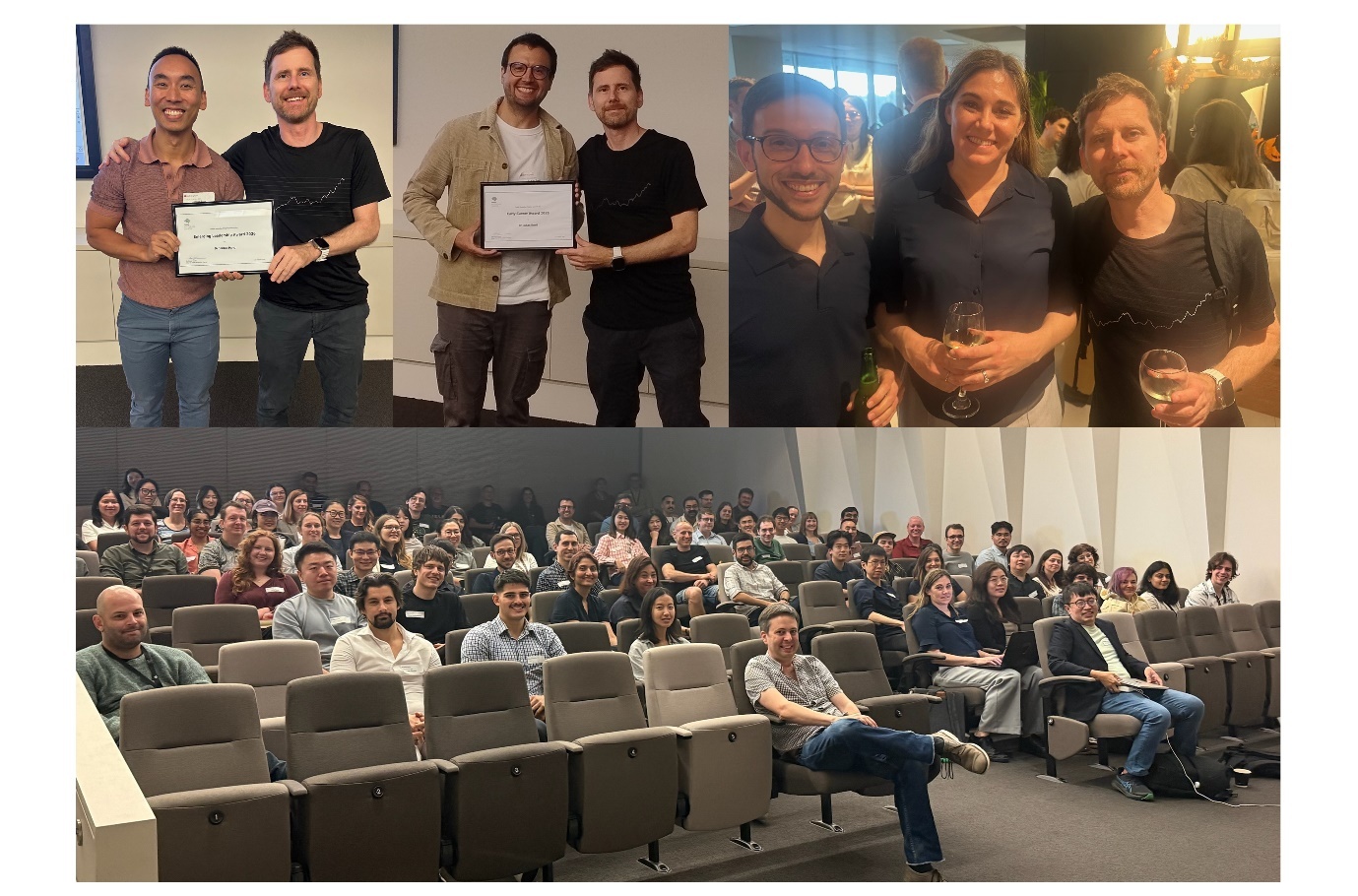
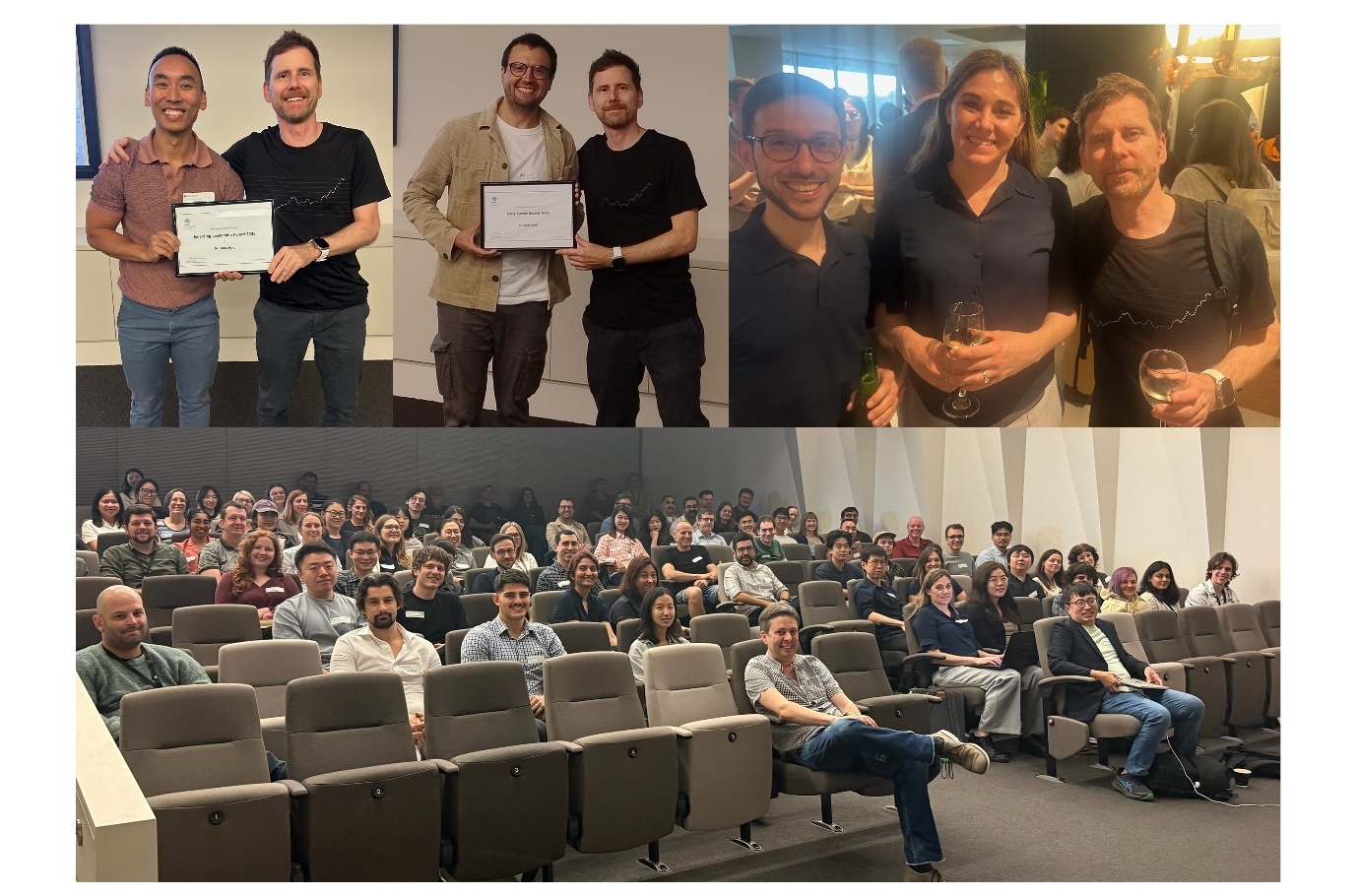
Our 7th annual chapter meeting was held on October 23, 2026, at the QIMR Berghofer Medical Research Institute in Brisbane. The meeting welcomed approximately 100 researchers and students from across Australia for a lively program of scientific exchange, featuring an international keynote, poster presentations, rapid-fire ECR talks, awards and the Chapter’s AGM.
Luca Cocchi, 2026 Chair of the Chapter, opened the meeting with an Acknowledgement of Country, before the international keynote seminar.
Our chapter was delighted to welcome Thomas Yeo of the National University of Singapore to deliver this year’s keynote. Thomas delivered an exceptional lecture showcasing a new methodology for precision network mapping with functional magnetic resonance imaging (fMRI) and sharing updates on ongoing clinical trials aimed at personalizing neurostimulation targets for depression. His keynote emphasized the importance of effect size estimates and reproducible findings in functional neuroimaging. He demonstrated that his new precision network mapping algorithm produces more reliable network maps, while detecting network expansion and contraction in depression with larger effect sizes than those reported by Lynch and colleagues.1 He emphasized the importance of dense sampling, long scan times, and longitudinal imaging for precision functional mapping. Thomas’s update on clinical trials in Singapore testing personalized neurostimulation targets2 generated particular interest, given the growing momentum around stimulation-site personalization among research groups within our Chapter.
The keynote lecture was followed by an invited presentation from Nandi Vijayakumar, Deakin University and series of rapid-fire ECR presentations on a range of topics. Nandi presented exciting new findings investigating brain-age trajectories across development and exploring how they relate to early-life adversity.3 Her presentation triggered discussion, particularly around the generalizability of brain-age estimates across cohorts and different age groups. The concept of a psychological age gap to parallel existing brain age gap estimates was also raised during question time. A psychological age gap could be estimated using measures of cognitive processing, emotional maturity, and executive function, enabling an adolescent’s developmental maturity to be assessed relative to same-age, same-sex peers.
The rapid-fire ECR presentations that followed highlighted the significant diversity of neuroimaging research across Australia. Topics included computational processing pipelines for lesion and susceptibility mapping as well as novel clinical neuroimaging research investigating inter-individual heterogeneity in neurodegeneration and the effects of psylocibin on brain connectivity. The ECR presentations were outstanding, highlighting the depth of talent and the vibrant state of neuroimaging research in Australia. The Best ECR presentation was awarded to Ashley Stewart (University of Queensland).
During the catered lunch break, participants engaged with the poster presentations outside the auditorium, exchanging ideas with presenters across almost 50 posters. Poster abstracts were submitted prior to the meeting and scored by the Chapter’s ECR and student representatives. The five highest ranked abstracts were selected for oral presentation, with all remaining abstracts accepted for poster presentation. The Best Poster Award was awarded to Lachlan Hamilton (QIMR). The poster presentations reflected our Chapter’s strength in computational neuroscience, clinical neuroimaging, developmental neuroimaging, and neurostimulation.
All abstracts presented at this year’s meeting will be published in Zenodo. Abstracts presented at last year’s annual meeting in Melbourne are already openly available (https://zenodo.org/records/20278234).
After lunch, the OHBM Australia Emerging Leader and ECR Awards were announced. They are awarded annually and were established by the Chapter in 2025. The selection process invited self-nominations from eligible applicants, with more than 10 candidates evaluated by former Chapter Chairs and senior members. The ECR Award recognizes promising early-career researchers with noteworthy contributions to human brain mapping and it was awarded to Lukas Roell of the University of Melbourne. The Emerging Leadership Award honors early-to-mid-career researchers who demonstrate exceptional independence, leadership, and significant scientific contributions. This year, James Pang of Monash University received the 2026 Emerging Leadership Award.
Both awardees were invited to give a brief presentation on their research. Lukas presented a novel resting-state functional connectivity biomarker involving the nucleus accumbens for predicting worsening negative symptoms in psychosis. James showcased his team’s work in computational connectomics across spatial scales and species, highlighting how computational modelling can unlock new insights into brain organisation and function. The OHBM Australia Chapter congratulates James and Lukas on their awards!
The afternoon session comprised presentations by the incoming 2027 Chapter Chair, Claire O’Callaghan (University of Sydney), and invited speaker Luke Hearne (QIMR). Claire presented a conceptual overview of sharp wave ripples in the hippocampus, circuits involved in this phenomenon across whole brain and its relation to mind wandering.4 Using mouse imaging and LFP recordings, she presented results showing that brain-wide suppression of activity precedes hippocampal sharp-wave ripples, which in turn presage distributed responses during sleep and wakefulness. To conclude the scientific program, Luke presented his recent work investigating how humans and artificial intelligence (transformer architectures) solve relational reasoning tasks. He presented results suggesting that transformer models could successfully solve problems that standard brain models could not.5
Our AGM was held at the end of the conference. Reports were provided by the Chair and Treasurer, giving an update on finances and Chapter activities through the year, which included a webinar series on Bayesian statistics led by the Chapter’s ECR and student representatives. The Chapter remains in a strong financial position but remains critically dependent on support from OHBM International and our national sponsors. Several special resolutions were passed at the AGM, including establishment of a webmaster role to the executive committee and provisions for electronic voting.
Members also voted for the 2028 OHBM Council during the AGM. Valentina Lorenzetti (Australian Catholic University) was elected the 2028 Chapter Chair. We extend our sincere thanks to Luca, his team and the local organizing committee for delivering an outstanding Chapter meeting and scientific program. We also congratulate Valentina and her team and wish them every success in shaping the Chapter in 2028, while also wishing our incoming 2027 Chapter Chair (Claire O’Callaghan) all the very best for the year ahead.
Key initiatives for the year ahead may include offering travel support to students wishing to travel to Toronto in 2027 for the OHBM international meeting. Locally, we have plans to strengthen links with the New Zealand neuroimaging community via a webinar event, in order to foster stronger collaborative links in the region. We will continue our program of running educational webinars to support and train junior researchers, and we will be planning for next year’s national meeting to run at the University of Sydney.
Further details about the OHBM Australia Chapter and its activities can be found on our website (www.ohbm-aus.github.io/). We acknowledge the continued support of OHBM International and our long-standing national sponsor, the National Imaging Facility, in strengthening Australia’s neuroimaging community. This year, our annual meeting was additionally supported by the Queensland Neurostimulation Centre.
We congratulate all our award winners and look forward to bringing our Chapter’s research to the global stage in Toronto next year!